Roj Ka Hai · Story 1
The Push
A ₹12,999 pair of sneakers. A 44-degree afternoon. One flyover, and about two minutes to decide what kind of person you are.
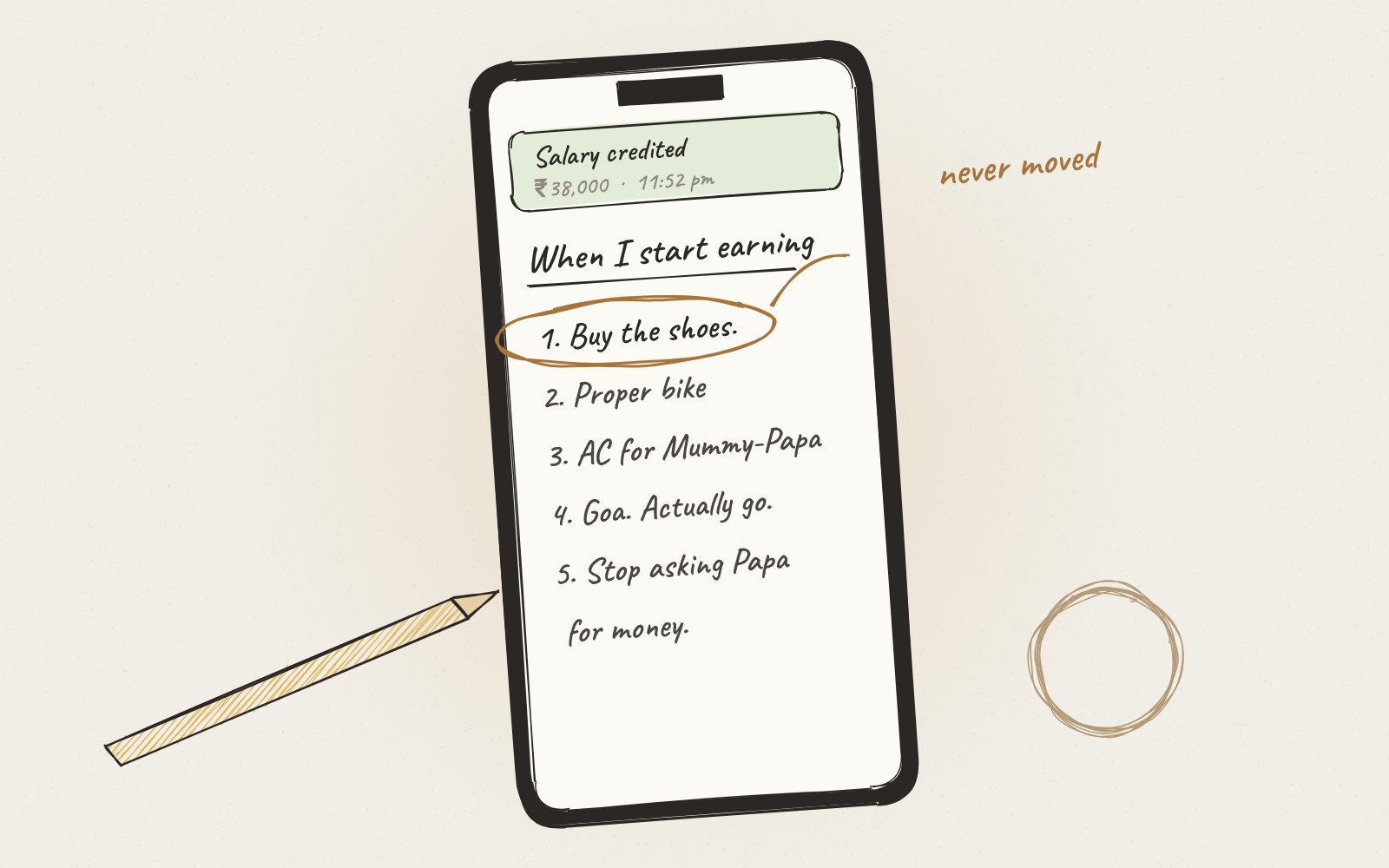
Manav kept a list on his phone. He had started it in the second year of engineering, on a night when the hostel Wi-Fi was down and there was nothing to do but think about the future. The note was called When I start earning.
When I start earning
-
Buy the shoes.
-
Upgrade the scooter to a proper bike.
-
Split AC for Mummy-Papa's room.
-
Goa with the boys. Actually go this time.
-
Stop asking Papa for money.
The order mattered. Over three years he had moved items up and down the list, but item one never moved.
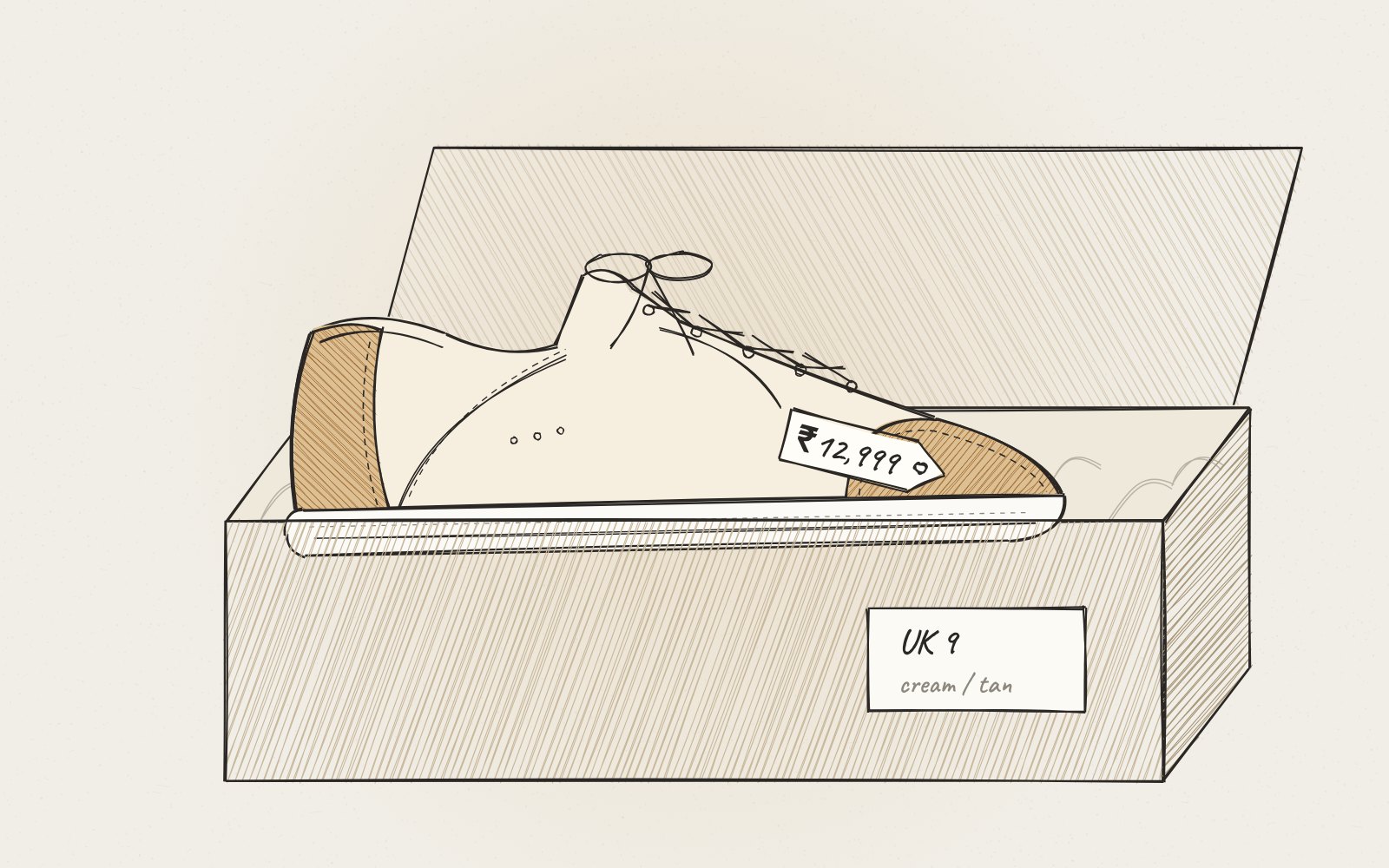
The shoes had been his lock screen since college: low-top leather sneakers, cream with a tan suede toe, stitching you could see from across a room, and a sole that cost more than his first mobile phone. Twelve thousand nine hundred and ninety-nine rupees. He used to look at the price and laugh. Who pays that much to walk?
In April, at twenty-two, his first full salary arrived from his first real job, as an analyst at a logistics company. Thirty-eight thousand rupees landed in his account at 11:52 one Thursday night. He was refreshing the banking app when it came in.
He ordered the shoes at 11:58.
Manav wasn't poor and never had been. Papa was a section officer at the state electricity board and Mummy taught at a primary school. They had a two-bedroom flat, a 2011 Alto, and a fridge covered in magnets from every pilgrimage. Manav had never gone without anything he needed.
But he had never had anything he didn't need. Everything in his life had been sensible: the sensible school, the sensible branch of engineering, the sensible school shoes bought every June a size too big "so they'll last."
These shoes were not sensible, and that was the point. They were the first thing he owned that existed only because he wanted it.
When the box arrived, he filmed the unboxing for his Instagram story. Forty-one people watched it. Rohan from college replied "bro finally 🔥🔥." Mummy picked one up, turned it over and asked, "Thirteen thousand? For this?" He took it back from her gently, the way you take back a phone you don't want someone scrolling through.
He didn't wear them to the office; the office was for the old black formals. He didn't wear them on the scooter, because the gear shift would crease the toe. He spent six hundred more on a cleaning kit: suede brush, foam cleaner, protector spray. He kept the shoes in their box, in the tissue paper, on top of the cupboard where nothing could fall on them.
He had worn them exactly twice, both times around the house, just to feel them.
The first real outing was a Saturday in late May. The college group was meeting at a café across the river, all six of them in one place for the first time since graduation. Rohan, Ishita, Kunal, everyone. Everyone had seen the story.
That afternoon the city touched forty-four degrees.
He broke his own rule and wore them on the scooter. Just this once, he told himself. He'd ride carefully and keep his foot off the gear. He was going to walk in wearing them, not carry them in a bag like a fool.
The road to the café crossed the river on a long, steep flyover, the kind built for cars and not for people. At three in the afternoon the asphalt shimmered and the air above it looked like water. Everyone had their head down and their scarves pulled over their faces, going as fast as traffic allowed, because nobody stayed under that sun one second longer than they had to.
Halfway up the slope, Manav saw the cart.
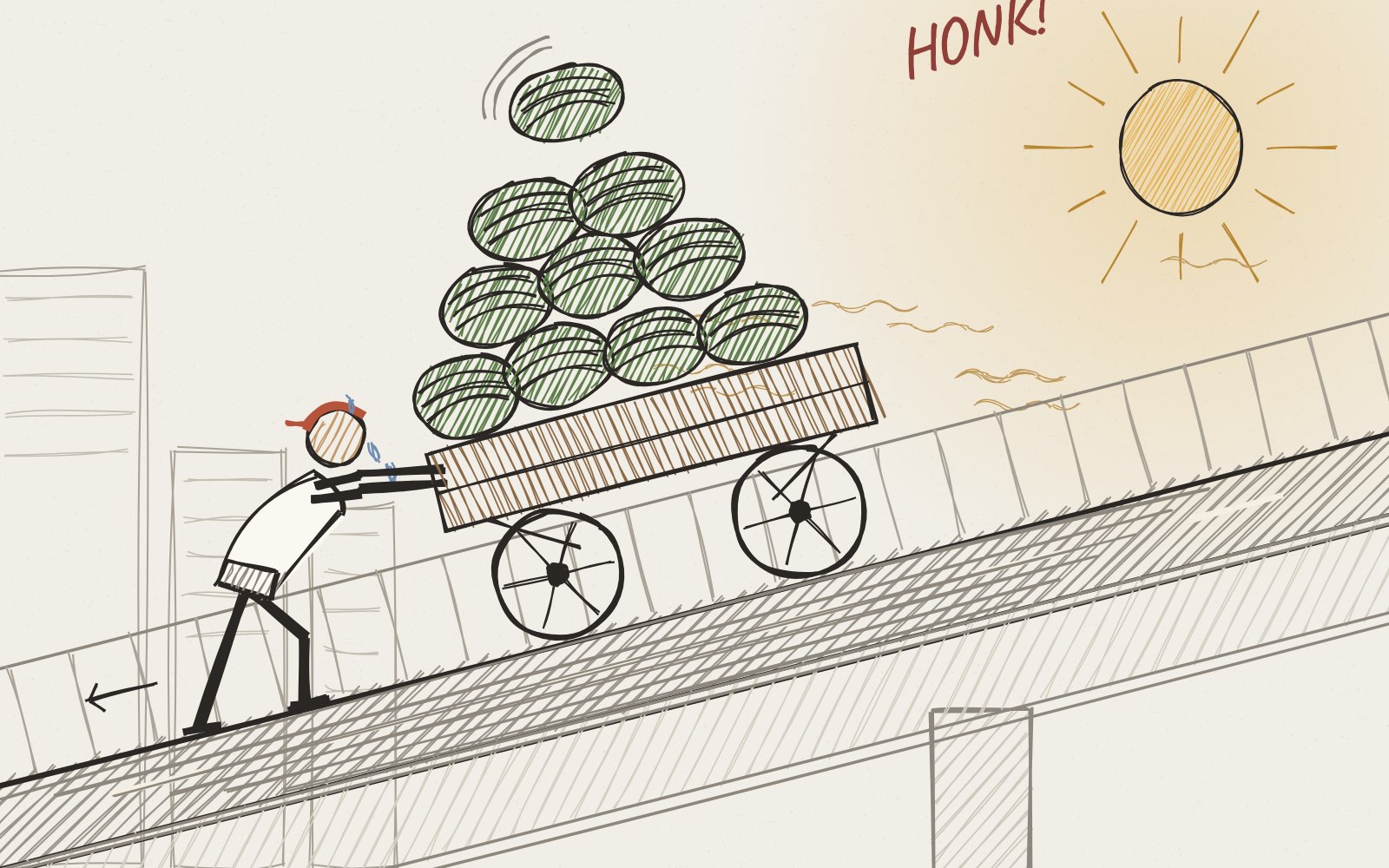
It was a wooden handcart on two bald tyres, piled high with watermelons. Behind it, pushing, was an old man, sixty at least, in a sweat-soaked banian with a cloth tied around his head. His arms were locked straight and his body leaned almost flat against the cart. His feet, in cracked rubber chappals, slid back an inch for every two inches forward.
The cart wasn't climbing anymore. It was barely holding its place.
Cars swung around it, honking. A bus passed close enough to rock it. A watermelon at the top of the pile shifted, the old man threw up a hand to catch it, and for one terrible second the whole cart rolled back half a foot toward the traffic before he got his shoulder under it again.
Manav slowed down.
He knew what he was supposed to do. Everyone in India knows. You've seen it a hundred times: someone on a two-wheeler rides up behind the cart, plants a foot on it, and lets the engine do the work. Bike pushes foot, foot pushes cart, cart goes up the bridge. Two minutes, maybe.
He also knew exactly what it would do to his right shoe.
The thoughts came fast, and none of them were noble.
The back of that cart is raw wood on an iron frame. There are nails in it. There are always nails.
Suede doesn't survive friction. The toe will scrape, the stitching will catch, the sole will grind on the edge.
Thirteen thousand rupees. A third of a salary. Item number one.
Six people at the café have seen the story.
There's nobody behind me. Someone else will do it.
A boy on a Pulsar came up on his right, slowed, looked at the cart, looked at the old man, and opened the throttle. Gone. Then an Activa. Then a man on a Splendor with a child on the tank, who at least had the decency to look guilty as he passed.
Manav saw himself in every one of them.
So he did what middle-class people do when they feel guilty: he reached for his wallet. I'll give him two hundred rupees. For half a second it felt like a solution.
Then the cart slid back again, and he understood something he had never had to think about before. Money doesn't push a cart up a bridge. The old man didn't need two hundred rupees. He needed the next ninety seconds, and Manav was the only person on that road who had slowed down long enough to give them.
He looked down at his shoe. Cream leather, tan suede, perfect.
I waited three years for you.
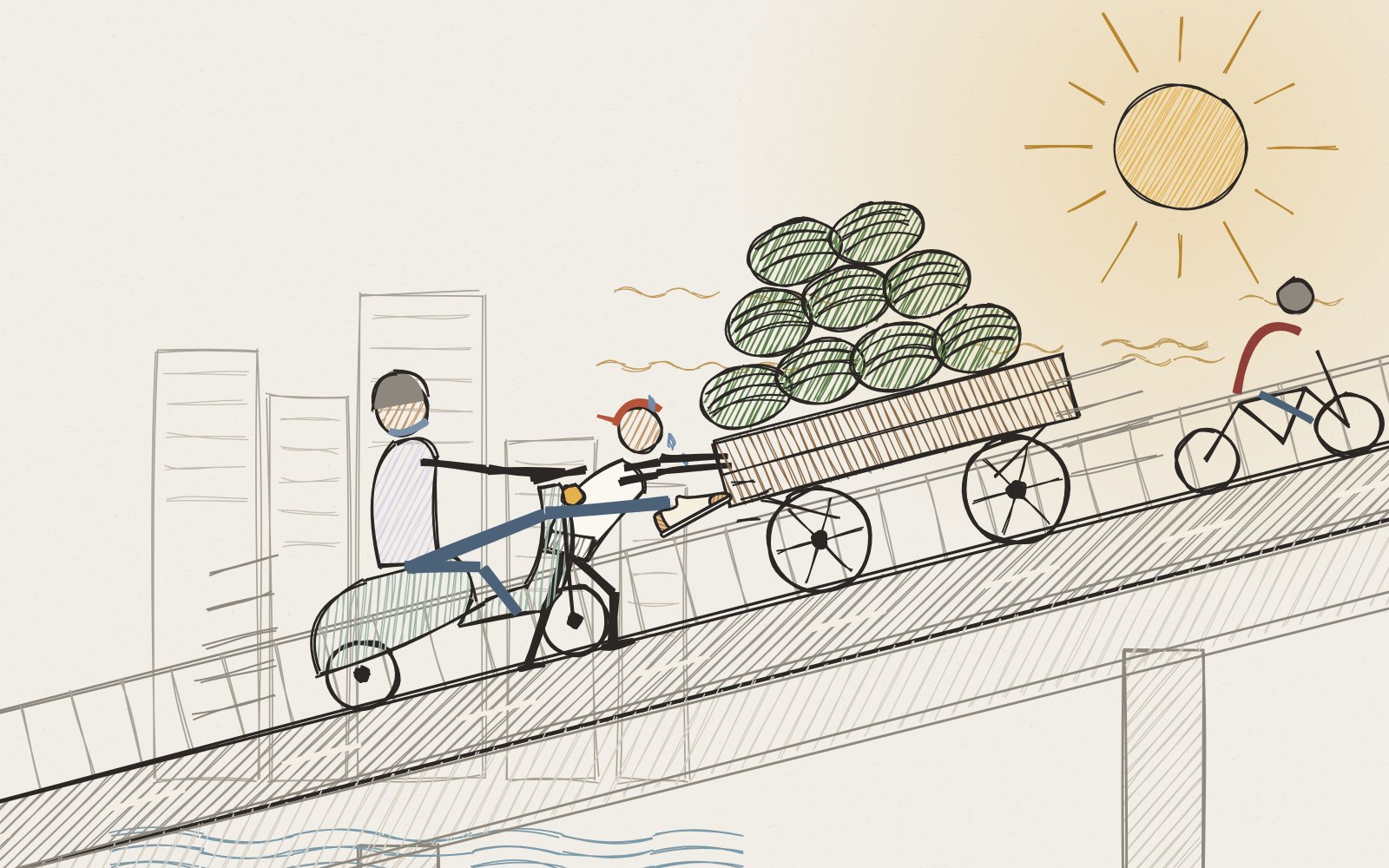
Then he pulled up behind the cart and put his foot on it.
It was worse than he had imagined.
The wood was splintered and the iron frame was hot enough to feel through the sole. He set the ball of his right foot against the corner and eased the throttle. The scooter whined. The cart was heavier than anything he had ever pushed: a tonne of fruit, wood and one exhausted man.
For a moment nothing moved. Then everything did.
The cart lurched forward. The old man stumbled, caught himself, and looked back over his shoulder in total confusion. Then he understood, and something crossed his face that Manav would think about for a long time. It wasn't gratitude. It was relief, the kind that comes when you've been holding something too heavy for too long and somebody finally takes a corner of it.
"Bas, beta, bas. Dheere," the old man gasped. Easy, son. Slowly.
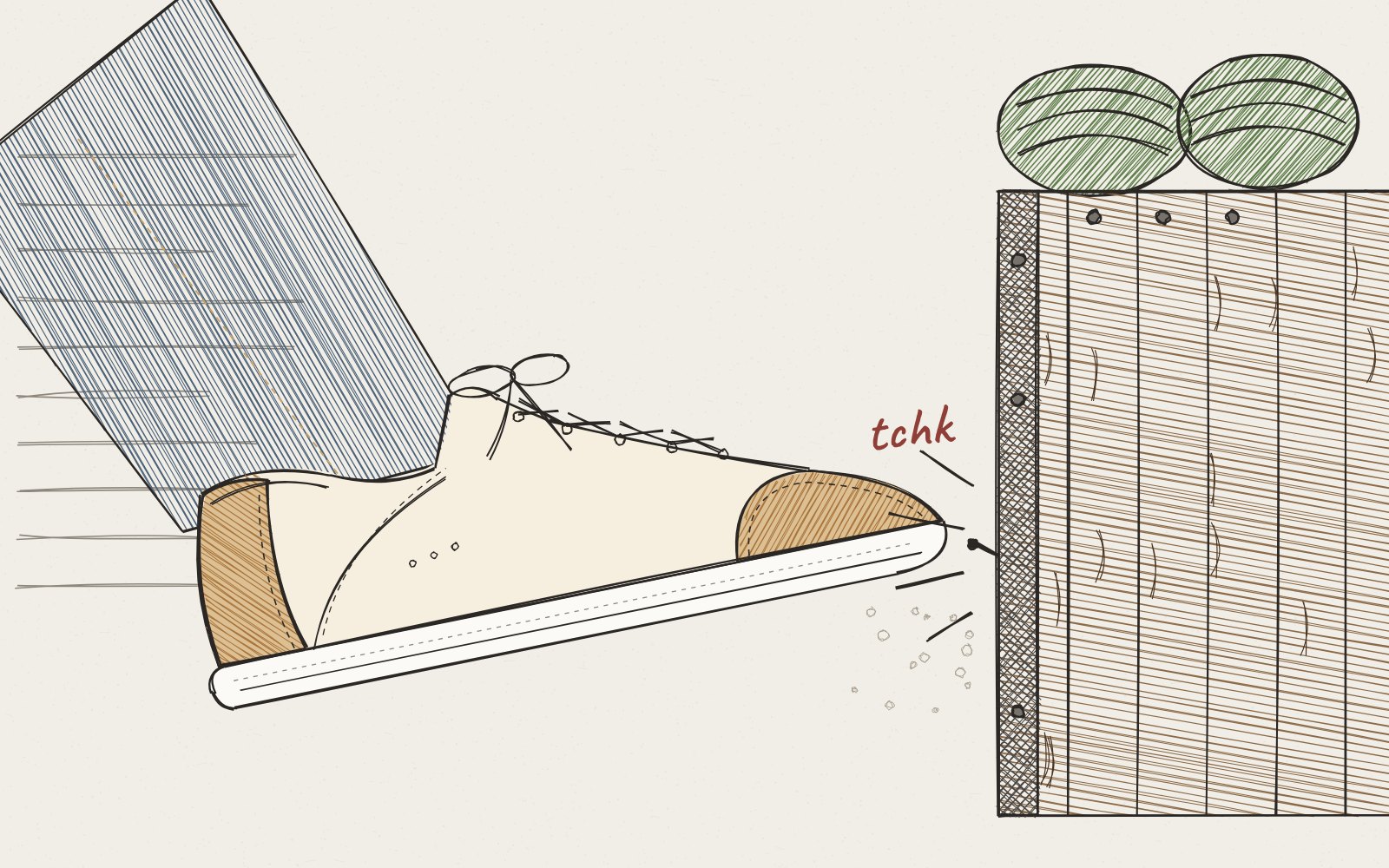
They climbed together, scooter and foot and cart and man, at walking pace, in the middle of the lane, with horns going off all around them.
Manav heard the shoe before he felt it. A dry rasp of suede on raw wood with every jolt, and then something sharper: a snag and a small tearing tchk as a nail on the frame caught the toe and opened it.
He didn't look down. He kept pushing.
The slope went on forever. The sun pressed on the back of his neck like a hand. His thigh started to shake from holding the angle, and sweat ran into his eyes. The old man kept walking, kept steering, kept saying dheere, dheere like a prayer.
Then the road levelled out, and they were at the top.
The old man pulled the cart to the side and wedged a brick under the wheel. He turned around and folded his hands. He was breathing too hard to speak.
Manav waved it off, embarrassed. "Koi baat nahi, kaka."
The old man picked the biggest watermelon off the pile and held it out. Manav said no. The old man insisted. Manav said no again, so the old man set it on the scooter's footboard himself and stepped back, leaving nothing to argue about.
"Roj ka hai," the old man said, nodding at the bridge. It's every day.
Then he leaned into the cart and started down the other side.
Only then did Manav look.
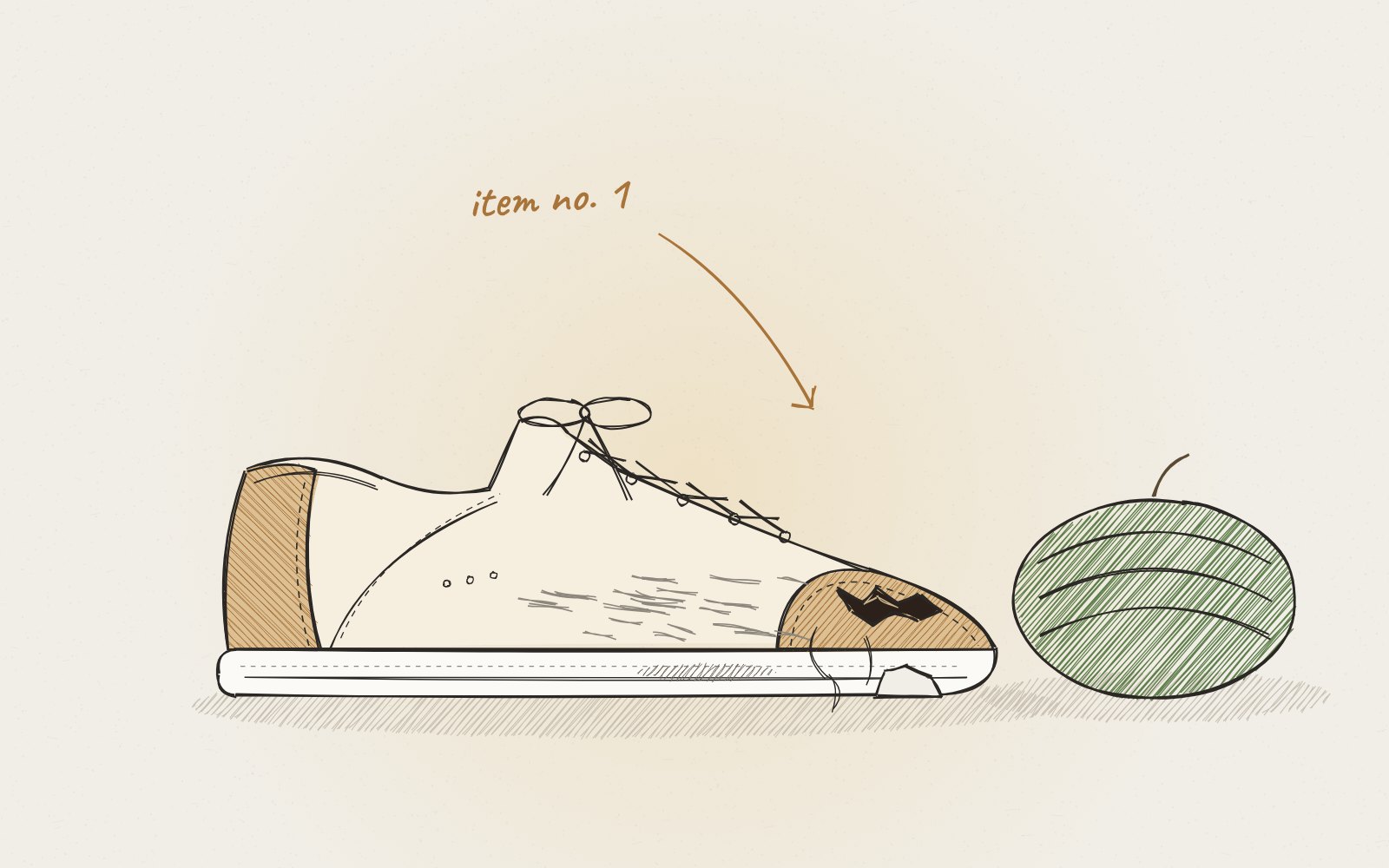
The tan suede toe had a clean three-centimetre gash, with the lining showing through like a wound. The cream leather along the side was scraped grey. A chunk had been ground off the edge of the sole. The stitching he had loved, the stitching you could see from across a room, had popped in two places and hung loose.
He sat on the scooter at the top of the flyover, in forty-four degrees, with a watermelon at his feet, and looked at item number one.
He didn't feel like a hero. That surprised him most. He felt a little sick, a little stupid, and strangely light, all at once.
He was forty minutes late to the café.
Rohan saw the shoes first. "Bro. Bro. What happened? Day one?"
Everyone looked. Ishita winced. Kunal laughed so hard he had to put his coffee down.
Manav could have told them. It would have made a good story. They would have said respect and legend, and for one evening the torn shoe would have been a medal.
He said, "Scooter," shrugged, and ordered a cold coffee.
He wasn't sure why he kept it to himself. Maybe because telling it would turn the moment into something he had done for an audience. Maybe because he kept hearing roj ka hai. Every day. The old man would climb that bridge again tomorrow, and the day after. Nobody at this table would ever push that cart, and probably neither would he.
One push on one afternoon. It felt like nothing. It also felt like the only real thing he had done since his first salary.
On Sunday, Mummy found the shoes in the box and held up the right one without a word.
"I know," Manav said.
"Thirteen thousand," she said, but softer this time. Papa had already heard the story from the watermelon, which had come home on the scooter's footboard and needed explaining.
On Monday, on his way to work, Manav took the shoes to the cobbler outside the bus depot. The man turned the right one over in his hands, clicked his tongue at the price Manav told him, and stitched a patch of dark brown leather over the torn toe for eighty rupees.
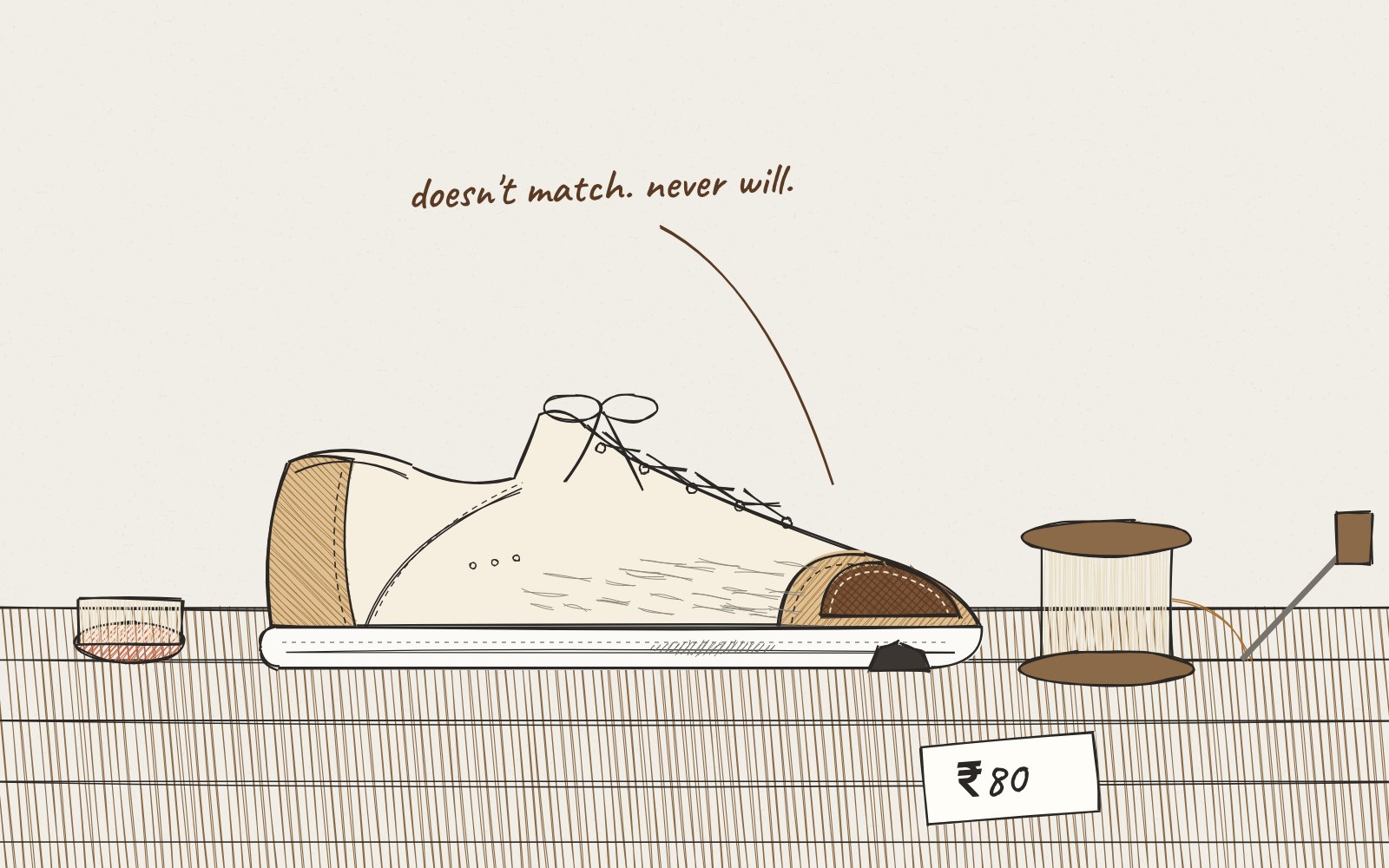
It didn't match. It would never match.
That evening Manav opened his phone, scrolled to the note, and looked at item one for a long time. He didn't delete it, and he didn't tick it off. He added one line at the bottom:
- Roj ka hai.
On Tuesday afternoon, heading back from a client site, he took the long way across the river. He told himself there was no reason.
Halfway up the flyover, in the shimmering heat, was a wooden cart on two bald tyres, and an old man leaning into it, sliding back an inch for every two inches forward.
Manav pulled in behind him and put his right foot, the one with the brown patch, against the back of the cart.
"Chalo, kaka."
The first story in Roj Ka Hai, a collection set around one flyover and the people who cross it.
That's Roj Ka Hai.
The next story is on its way. Leave your email and we'll send it when it lands.
