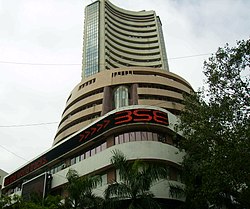
A Bank Nifty put option worth 1.70 rupees traded at 68.55 rupees a few minutes later, then crashed back toward zero — a nearly 4,000% round trip, inside a single fifteen-minute window, on a contract that was supposed to be expiring worthless anyway. This happened on the Bombay Stock Exchange's first monthly derivatives expiry since the Securities and Exchange Board of India rolled out its new Closing Auction Session on August 3. CAS exists specifically to make closing prices harder to distort. On its first real test against a monthly expiry, it produced one of the more violent closing-minute swings anyone can point to on an index option this year.
What CAS was built to fix
The old system set a stock's official closing price from the volume-weighted average of trades in the last half hour of the regular session — a window narrow enough that a trader with enough capital could nudge the final print by trading heavily right before the bell, without needing to move the stock at any other point in the day. That mattered because index funds, options settlement, and a long list of financial contracts all reference the official close, not the day's high or low. A closing price that can be nudged is a closing price that can be gamed.
CAS replaces that with a short, separate auction after the regular session ends, for roughly 200 stocks that have listed derivatives contracts. Buy and sell orders queue up in a defined window, and the exchange computes a single clearing price from where supply and demand actually meet — the same basic mechanism used to set opening prices on many global exchanges, applied here to the close instead. Stocks without derivatives keep using the old VWAP-based method. On paper, it is a narrower, harder-to-game substitute for a wider, easier-to-game one.
Where the two clocks stopped matching
The trouble is that an index option doesn't settle off the auction directly — it settles off the index, which is built from the individual stocks going through that same auction. And while the underlying stocks are locked into the auction's price-discovery window, the options written against that index keep trading right up until markets close, on the old schedule. For most of the day that timing gap doesn't matter. On an expiry day, when a huge share of outstanding options are only worth anything if the index moves through a specific level in the final minutes, it matters enormously.
That is exactly what August 28 exposed. A near-worthless out-of-the-money Bank Nifty put — priced at 1.70 rupees because the market had already decided it would expire meaningless — sat in a live options market that kept trading even as the underlying index's actual closing level was still being determined inside the auction. A small move in that still-settling index was enough to make the option look, briefly, like it might land in the money. The price shot to 68.55 rupees. Then the auction finished, the index's real closing level printed, and the option corrected back to close to zero. The whole arc took about fifteen minutes and happened on a single contract that, by any reasonable read of the day, was never actually going to pay out.
| Old VWAP close | New Closing Auction Session | |
|---|---|---|
| How the close is set | Volume-weighted average of the last 30 minutes of trading | Single clearing price from a post-close auction |
| What it targeted | Large late trades nudging the final print | Concentrated late-session manipulation |
| Coverage | All listed stocks | ~200 stocks with derivatives contracts |
| What it didn't account for | — | Options on those stocks/indices still trade live while the auction is running |
This was not a one-off
CAS had already produced one bout of confusion before this: on its very first day, August 3, the Nifty's official closing level appeared to jump nearly 200 points after the regular 3:15 pm session had ended, which was enough to send traders checking whether fresh trades had somehow occurred post-close. They hadn't — it was the auction working as designed, just in a way nobody had seen before and the market wasn't yet reading correctly. Bloomberg's markets desk went further, tying a chunk of a subsequent Nifty rally directly to confusion over how the new mechanism was pricing the close. A system meant to remove a source of unpredictability has, in its first month, become a source of unpredictability in its own right — different in kind from the manipulation risk it was built to close off, but not smaller in the volatility it's producing for anyone holding a position into the last half hour.
SEBI's answer, so far, is "we're watching"
The regulator's public position is that it is engaging with brokers and exchanges and monitoring how CAS behaves in practice. "If there is a need to tweak it and improve it, we will also see that," SEBI said, without committing to a specific fix or a timeline. That is a reasonable stance for a genuinely new mechanism in its first month — auction-based closes are common globally and CAS is not a bad idea in principle. But it leaves the actual mismatch — an auction-cleared underlying against a continuously-traded derivative — sitting exactly where it was on August 28, unresolved, ahead of whatever the next monthly expiry brings.
The next stress test is already on the calendar
CAS doesn't get to ease into this. MSCI's India review takes effect after Sunday's close, adding Laurus Labs, Lenskart, Adani Energy Solutions and Groww-parent Billionbrains Garage Ventures to the index while dropping SBI Cards, Astral and Balkrishna Industries — a rebalancing that brokerage estimates put at roughly $2.3 billion in mechanical passive inflows, concentrated in a narrow window as index funds trade to match the new weights. That is precisely the kind of large, clustered, non-discretionary order flow that a closing auction is supposed to absorb cleanly. Whether CAS handles that test better than it handled its first expiry day is the more useful thing to watch this week than any single day's Sensex number — because the mechanism setting that number is still, by its own regulator's account, a work in progress.