Four stories broke this week, in four corners of the economy, and each shared the same structural joke: the number everyone quoted was accurate, and also the wrong number to look at. A regulator's fix for market manipulation produced a wilder swing than the manipulation it replaced. A "29% off" tag was arithmetically correct and described a discount that never existed. A stock crashed 78% in a market where the product didn't get any cheaper. None of these are lies. They're a headline figure doing exactly what it's supposed to do while pointing somewhere other than the real story.
Markets: a regulator fixed one failure mode and discovered a new one
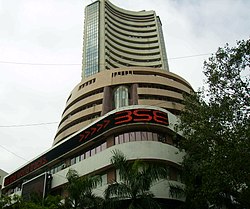
Start with the strangest number of the week: a Bank Nifty put option that traded from Rs 1.70 to Rs 68.55 and back down toward zero, inside a fifteen-minute window, on a contract that was supposed to expire worthless anyway. That happened on the BSE's first monthly derivatives expiry since SEBI's new Closing Auction Session went live on August 3 — a mechanism built specifically to stop traders from nudging the official close by dumping volume into the old system's narrow last-half-hour window. CAS works exactly as designed: it widens the price-discovery window and randomizes the exact closing moment, which makes it much harder to manipulate. What nobody fully priced in is that options settle off the underlying's official close, and a wider, later window on the underlying collides with option Greeks that were built around the old timing — so the fix for one kind of expiry-day distortion opened a gap for a different one. A regulation working correctly is not the same as a regulation working safely on contact with real order flow, and this week was the first time anyone got to see the difference at scale.
Two other market days made the same point in miniature. On Wednesday, the Sensex closed down 183 points and every wire service called it a red day — accurate, and also almost beside the point, because the BSE 250 SmallCap index rose 0.56% and the BSE 150 MidCap index rose 0.17% the same afternoon. Three large, index-heavy stocks — Infosys, Power Grid, Bharti Airtel — did enough damage on their own to paint the whole market red on paper while a few hundred smaller names quietly went up. Two days later, the Sensex rallied 0.43%, and the honest cause had nothing to do with India: it was Nvidia's earnings call, on a different continent, the night before. The Nifty IT index jumped 2.92% on a session where nothing changed in Bengaluru or Chennai — TCS and HCLTech investors were, in effect, trading an American AI-spending story that happened to be quoted in rupees.
Gadgets: the timeline slipped, and so did the definition of "on track"
The most consequential number of the week belongs to Tata's Dholera semiconductor fab, and it's a process-node figure most readers will skim past: 90 nanometres. In March 2025, Tata Sons' own annual report told shareholders the fab would start at 28nm. Union IT minister Ashwini Vaishnaw said first silicon would ship by December 2026. Neither is true anymore — the plant is opening at 90nm, roughly two full process generations behind the original pitch, with commercial output now guided to mid-2028, an 18-month slip from what the minister announced in writing. Tata Electronics' position is that this was the plan all along, which doesn't reconcile with what its own chairman told investors sixteen months ago. The fab is still opening. That's the accurate, positive-sounding headline. It's opening as a legacy-node plant serving auto and industrial chips, not the cutting-edge fab India's self-reliance pitch was built around, and that distinction matters more than the ribbon-cutting date.
The Realme P4s launch made a smaller version of the same point on a Flipkart product page: "29% off" a Rs 48,999 MRP, on a phone that had never had any other price, because it hadn't existed as a product yesterday. Every digit in that percentage is real arithmetic run against a number invented to be discounted from. Strip the theatre out and the P4s at Rs 34,999 is a genuinely competitive phone for its Dimensity 7400 Ultra and spec sheet — it just didn't need the fake anchor to get there, and neither did the iQOO Z11 or Poco M8 Power, whose real battle this month was never battery capacity so much as which one paired its cell with a chipset actually worth building around.
Footwear: a 78% stock crash that never left the building
Nike closed the week at a 12-year low, down roughly 78% from its 2021 peak, with StockX resale prices on its own marquee sneakers down by a third since 2020. That's an accurate description of Nike's balance sheet. It is not a description of what a pair of Nikes costs in an Indian mall this week, because it isn't cheaper there at all. India's roughly 48% duty stack on imported footwear means the crash in Nike's US retail and resale economics simply doesn't have a transmission mechanism into Indian shelf prices — the same wall that keeps Indian sneakers expensive when the brand is thriving keeps them expensive when it isn't. Nike's India business is still growing. Meanwhile Bata and Campus Activewear, the two homegrown names actually exposed to Indian footwear demand, both posted stronger Q1 FY27 numbers this week — Bata by extracting more margin from roughly flat sales, Campus by moving 11.7% more pairs. Two very different playbooks, both working, in a market a global crash can't reach.
Put the four stories side by side and the pattern isn't coincidence. A closing price, a discount percentage, a process-node number, a stock chart — each one is a real, defensible measurement of something. None of them, on their own, told you what was actually happening underneath. That's not a reason to distrust the numbers. It's a reason to keep asking what they're measuring before deciding what they mean.